The Patina Project
Not every surface needs to be perfect. Some need to be true.
The Patina Project is an interior that refuses to hide what it's made of. Raw concrete walls — cracked, stained, alive with history — form the backdrop for a space that finds beauty not in polish, but in presence. This is modern dark Wabi Sabi: the art of the imperfect, made deliberate.
Wabi Sabi asks you to stop apologizing for what ages.
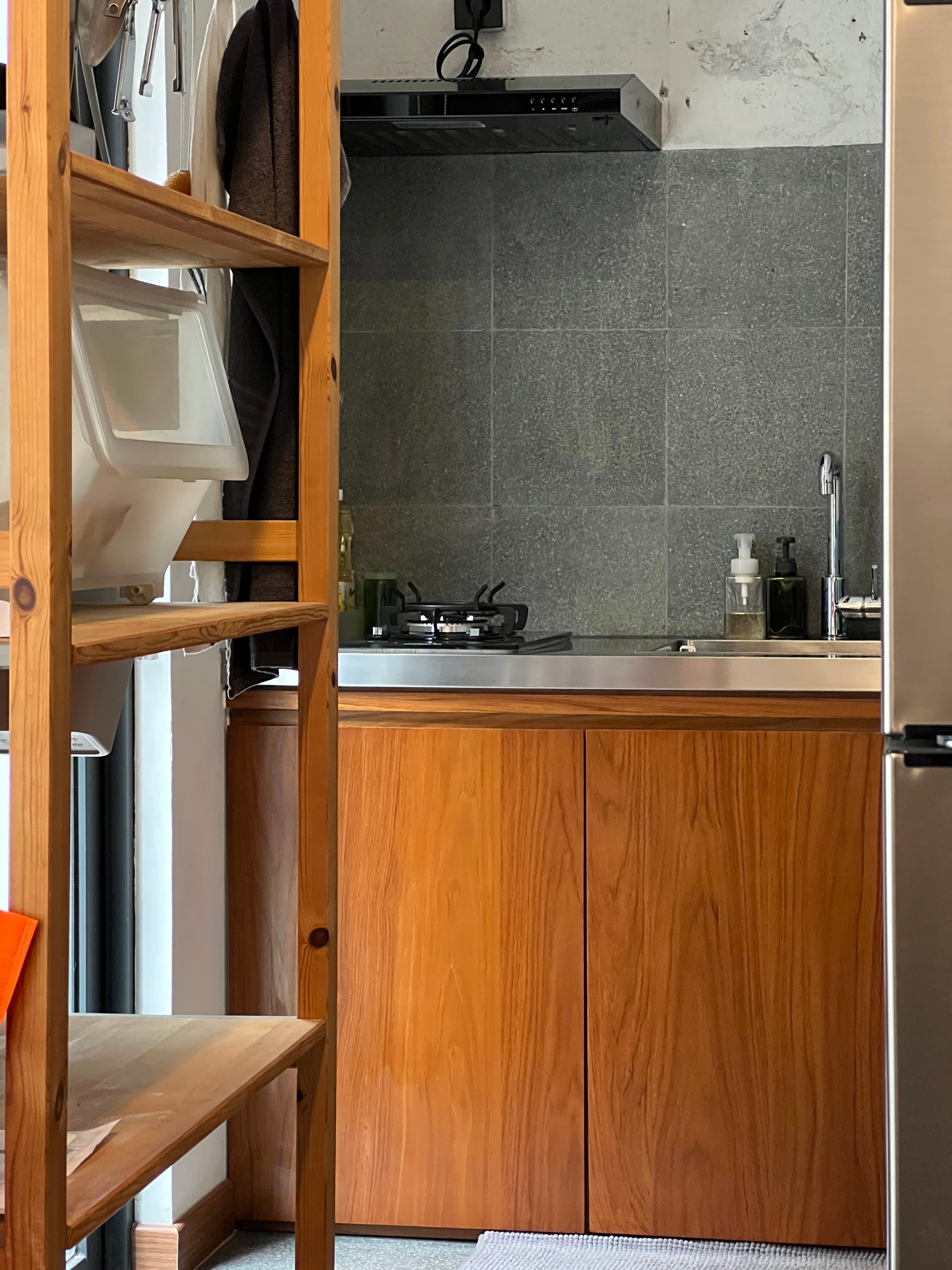
Most interiors work hard to conceal the materials beneath them. The Patina Project works in the opposite direction — stripping back, exposing, and celebrating. Bare concrete in its full, textured honesty. Dark steel. Solid teak with visible grain. Ribbed glass that catches light without pretending to be anything else. Every surface here has a story, and none of them have been edited out.
Where function is honest and beauty is accidental.
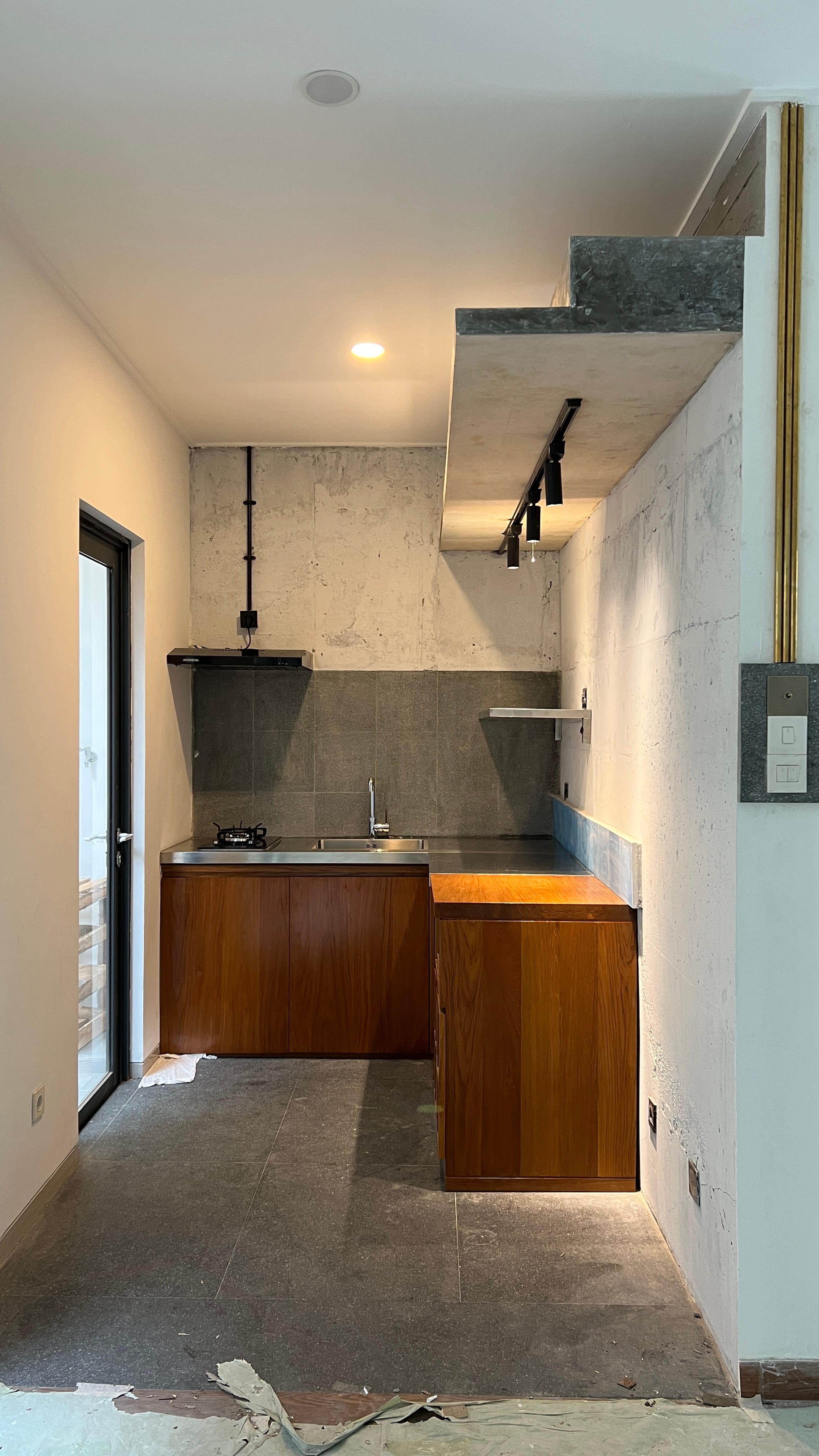
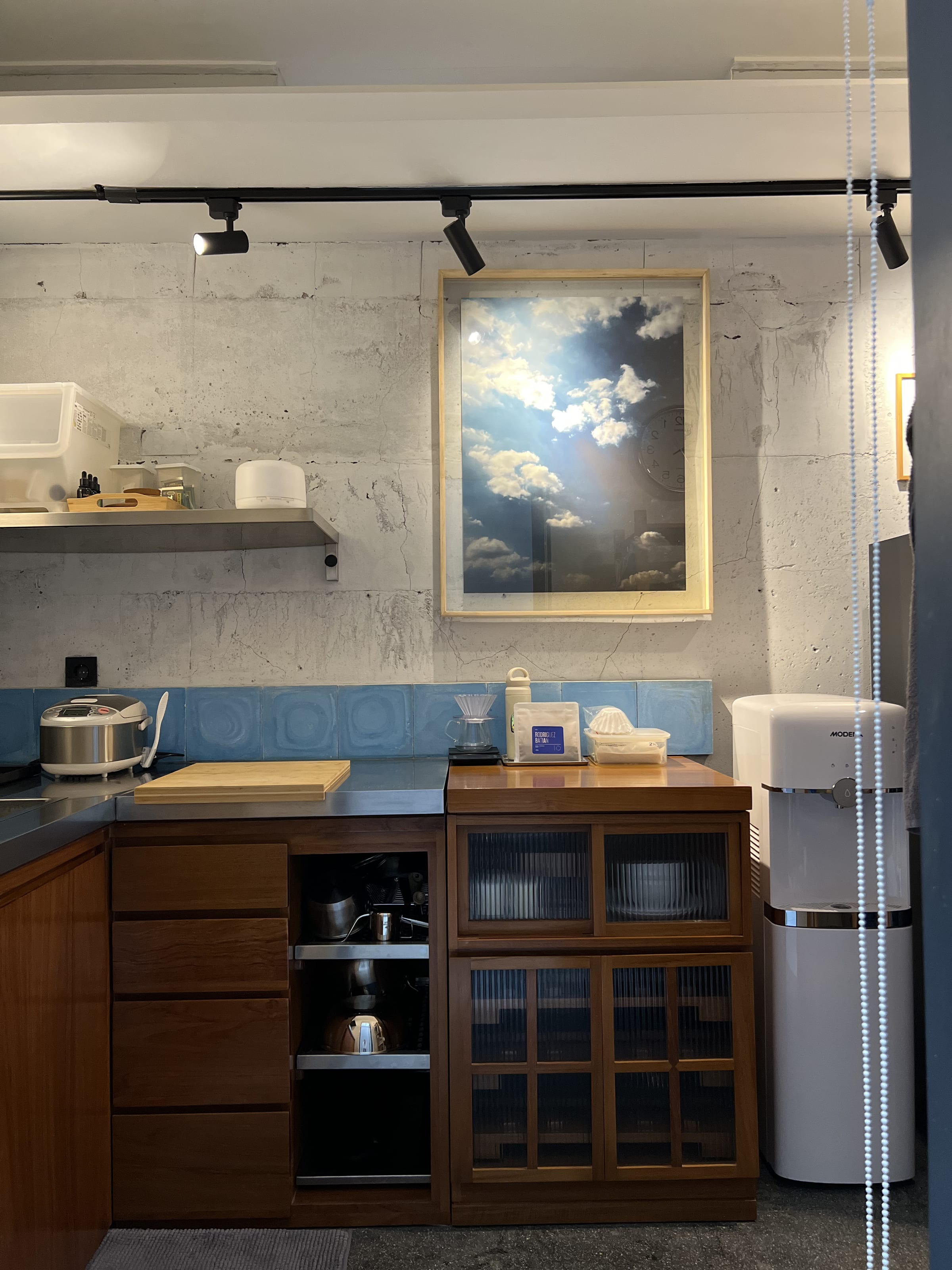
The kitchen doesn't announce itself. It simply works — and it does so with the kind of character that only real materials can carry. Warm teak cabinetry sits beneath a raw concrete wall that has never been asked to look new. Handmade blue ceramic tiles line the backsplash like a quiet exhale of color against the grey. Open steel shelves hold what's needed, nothing more. And above a framed photograph of open skies — hung directly on the imperfect wall — track lights throw pools of focused light, turning a working kitchen into something closer to a still life.
A dark refrigerator. A ceramic diffuser bottle. A small painting, pinned to a cracked wall.
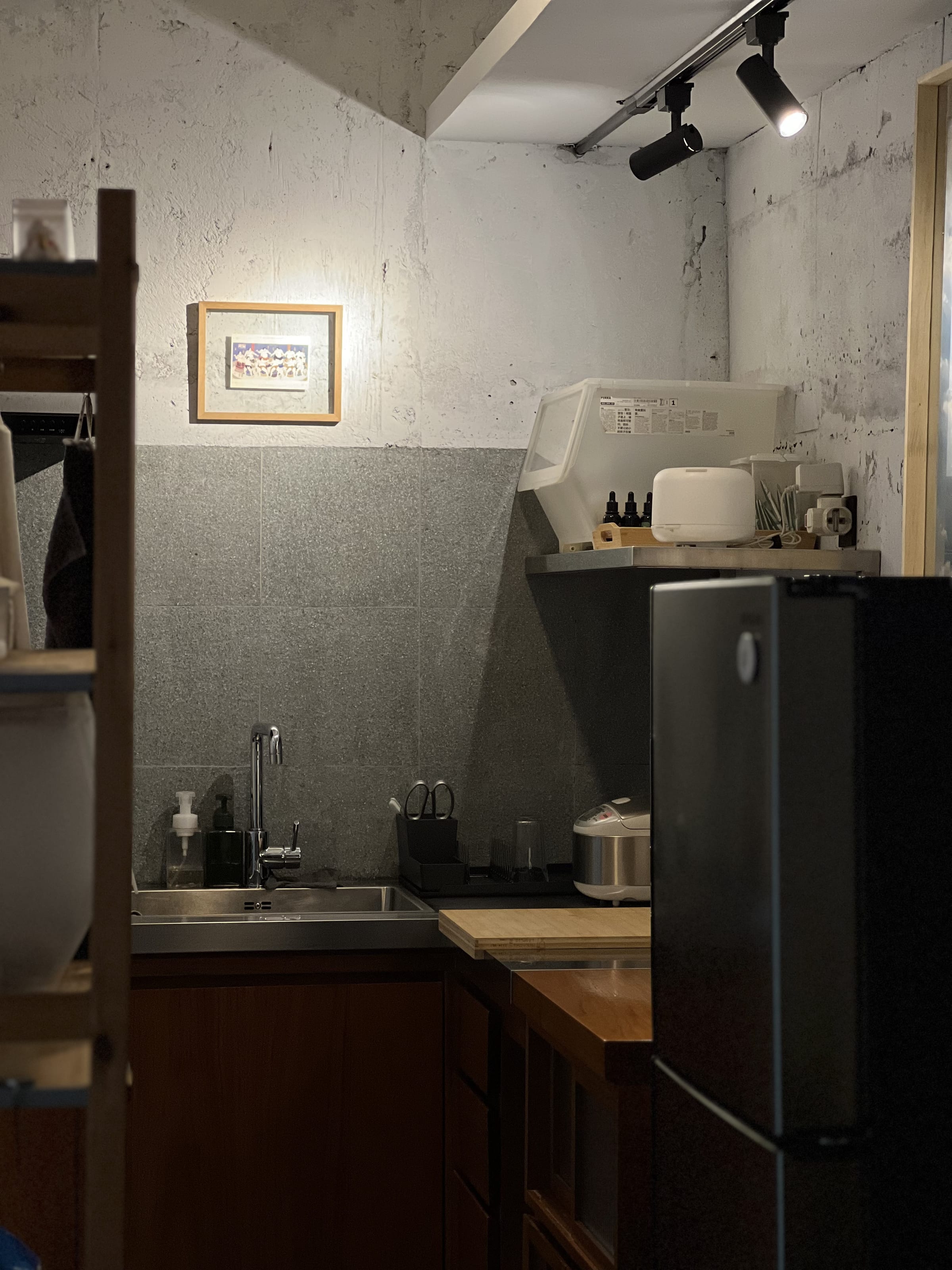
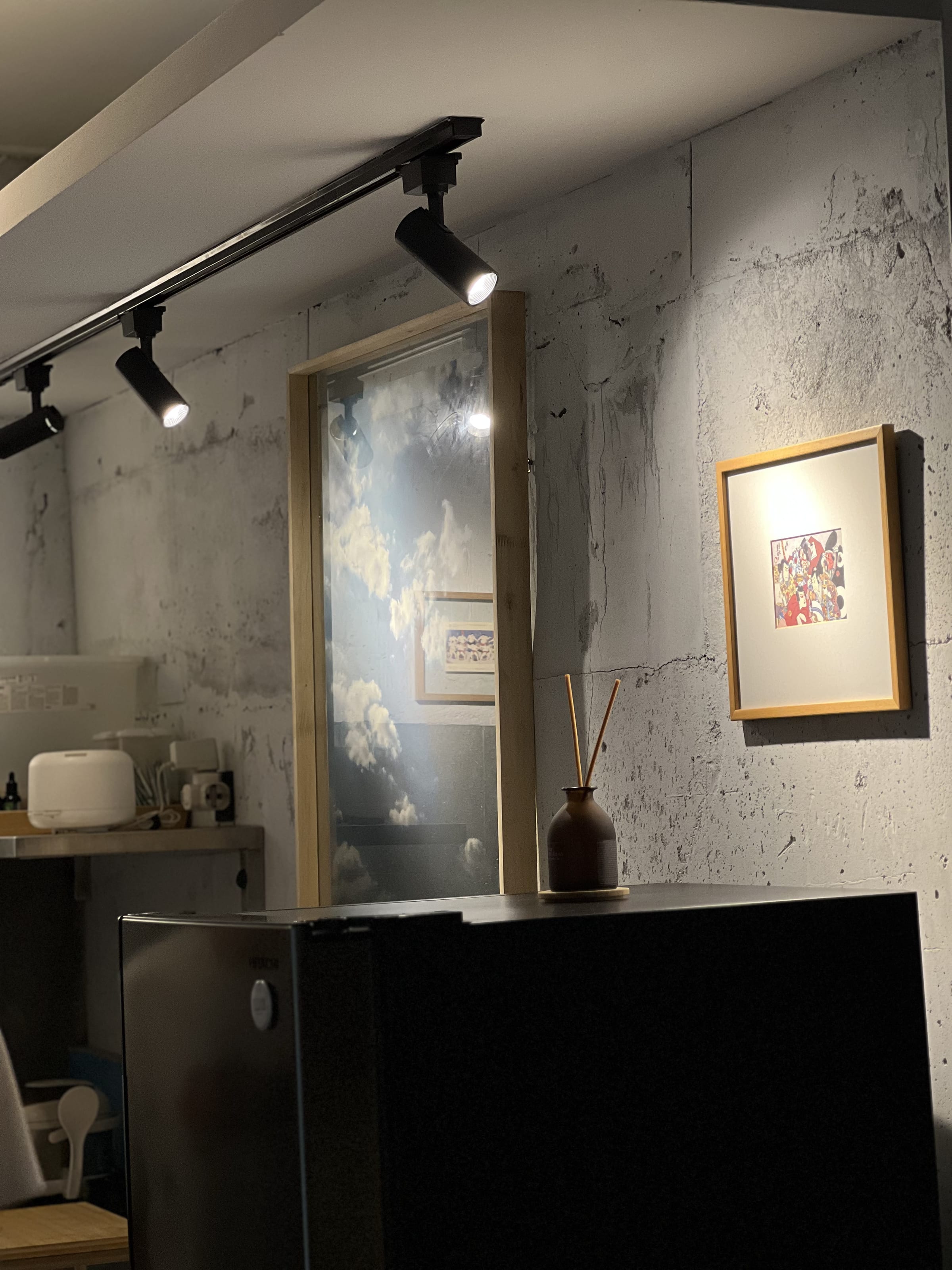
The Patina Project lives in its details. A dark compact refrigerator tucked beneath the counter. A reed diffuser on a matte black surface, placed without fuss. Framed artwork in raw timber frames — not centered, not overthought — resting against textured plaster that has earned every mark on it. Track lighting overhead draws the eye exactly where it's needed, casting the rest into a purposeful shadow. This is a space that knows how to be quiet.
Concrete. Teak. Steel. Ceramic. Nothing pretending to be something it isn't.
Each material in the Patina Project was chosen for what it actually is, not what it could be made to look like. The concrete walls bear the marks of their formwork. The teak darkens with use. The steel counter oxidizes slowly into something even more itself. Time is not the enemy of this interior — it is the co-designer. What you see now will look better in five years, and better still in ten.
In the details.
ThePatinaProjectisn'tfinished.It'sjustbeginningtoage.